Tell a counsellor what you do today and where you want to be seen. Fifteen minutes, no pitch.
Cloud & DevOpsCurriculum updated Oct 2026
TTFA Academy · A fellowship for people at work
DevOps Engineer Fellowship
For sysadmin, support or QADevOps Engineer
Linux, Git, Docker, Kubernetes, Jenkins, Terraform and Ansible on a pipeline you build and break yourself. From sysadmin, support or QA to DevOps Engineer, taught by people who do the job.
Designed for AI-native engineering roles: the AI in DevOps Work module covers GitHub Copilot for pipelines and infrastructure code, assistants in incidents and code review, and reading every generated line before it reaches production.
DevOps Engineer Fellowship is a live online program for the sysadmin, support or QA: the next step is being seen as a devOps Engineer. Linux, Git, Docker, Kubernetes, Jenkins, Terraform and Ansible on a pipeline you build and break yourself. Classes run over 24–36 weeks on weeknight evenings and weekends in IST and are recorded the same day, so a late shift doesn't cost you the week. You work in Linux, Git, Docker, Kubernetes, Jenkins, Terraform, Ansible and AWS on projects modelled on the mentors' production work, each reviewed 1:1, with doubt-solving on the LMS between classes. A counsellor confirms the batch, the schedule and the fee on one call; nothing is charged on the call.
Why this program
Why people pick DevOps Engineer Fellowship.
Results, your career, the part of the job you do by hand today, and who teaches it.
Results-focused
A pipeline you built, from commit to production
Linux, Git, Docker, Kubernetes, Jenkins, Terraform and Ansible on a pipeline you own end to end, with monitoring on it. Reviewed like production work.
Career-focused
From sysadmin, support or QA to DevOps engineer
You know systems. The programme adds the automation, the containers and the cloud that the DevOps engineer role asks for, on real deployments.
Pain-point focused
The Friday deployment, by hand, again
Build the pipeline once. You learn CI/CD, infrastructure as code and the monitoring that tells you before the user does.
Premium and professional
Taught by people who run this in production
Mentors who ship and operate at work, projects modelled on their own pipelines, 1:1 review of every build, recordings the same day. For engineers who want to be taken seriously.
Who this is for
For sysadmin, support or QA.
You already do part of this job. The program closes the gap between where you are and being seen as a DevOps Engineer.
You are a sysadmin, support or QA and want the next role
You know your domain; Linux is what you are missing
You can give evenings and weekends for the length of the program
You'd rather show working projects than a certificate
Probably not for you, yet
If you haven't worked in the domain at all, a counsellor will say so on the call and point you to a better starting program. If you want a certificate more than a portfolio, this isn't it.
What you'll build
Three projects you can show.
Each project is modelled on the mentors' production work and reviewed 1:1. Together they are your portfolio.
Project 1
A Linux project from real work
Modelled on the mentor's production work, with the messy parts left in, reviewed 1:1.
Project 2
A build you own end to end
Brief, build, review: the way a manager would hand it to you, with the checks that stop it breaking next month.
Project 3
A final project reviewed like production
Published, documented and defended, with the notes a senior would give you.
Curriculum
Seven modules, in the order the work happens.
24 to 36 weeks, depending on your pace. Each module ends with an assignment a mentor reviews.
Reviewed in Oct 2026: 9 topics added to match what the work now asks for.
7 modules · 54 topics · pick a module to see what it covers
Module 1 of 7
DevOps Foundations, Modern Infrastructure & Linux
Understand DevOps fundamentals, software development lifecycle, and modern infrastructure architecture for efficient software delivery.
DevOps Principles & Culture
Understanding DevOps philosophy, automation, collaboration, and continuous delivery practices. · Differences between DevOps, SRE (Site Reliability Engineering), and traditional IT operations.
Software Development Lifecycle (SDLC)
Understanding stages of software delivery from development to testing, deployment, and monitoring. · DevOps role in accelerating release cycles and improving system reliability.
Modern Application Architecture
Monolithic vs Microservices architecture. · Introduction to cloud-native applications and containerized environments.
DevOps Toolchain Overview
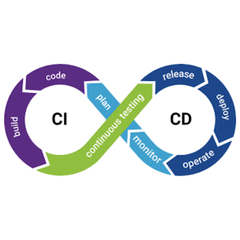
Understanding the DevOps pipeline: code → build → test → deploy → monitor.
Linux Fundamentals
Linux architecture, distributions, terminal commands, and file system structure. · Managing processes, users, permissions, and services.
Linux System Management
Package management and software installation. · System monitoring and performance troubleshooting.
Networking Fundamentals
Understanding TCP/IP, DNS, HTTP, ports, load balancing, and firewalls.
System Security Basics
Managing SSH access, firewall configuration, and system hardening.
Tools
The tools you'll work in.
You use each one on the kind of data your mentors handle at work, not on a toy example.
Linux
Git
GitHub
Docker
Kubernetes
CI/CD
Jenkins
Terraform
Ansible
AWS
Prometheus
Grafana
Generative AI
Linux & Bash Scripting
Learn system administration, shell scripting, and automation techniques to manage servers and deployment environments.
Version Control & Collaboration
Learn Git and GitHub workflows, branching strategies, and collaborative development practices used in modern DevOps pipelines.
Containerization & Orchestration
Deploy applications using Docker containers and Kubernetes clusters for scalable microservices architecture.
CI/CD Automation
Build automated deployment pipelines using Jenkins, GitHub Actions, and GitOps workflows.
Infrastructure Automation & Cloud Architecture
Gain expertise in Terraform, Ansible, and AWS cloud services to automate infrastructure provisioning and system configuration.
Monitoring, Observability & Reliability
Implement monitoring systems using Prometheus, Grafana, and centralized logging tools to maintain system health and performance.
And the skills around the tool
Critical Thinking
Abstract Thinking
Analytical Thinking
Problem-Solving Mindset
Business Acumen
Communication
Stakeholder Thinking
Curiosity & Question Framing
Attention to Detail (with big-picture balance)
Learning Agility
TTFA Academy is an independent training provider. It is not affiliated with, endorsed by or a partner of Microsoft, Salesforce or Alteryx. Microsoft, Power BI, Excel and Fabric are trademarks of the Microsoft group of companies. Tableau is a trademark of Salesforce, Inc. Alteryx is a trademark of Alteryx, Inc. Names are used only to identify the tools taught.
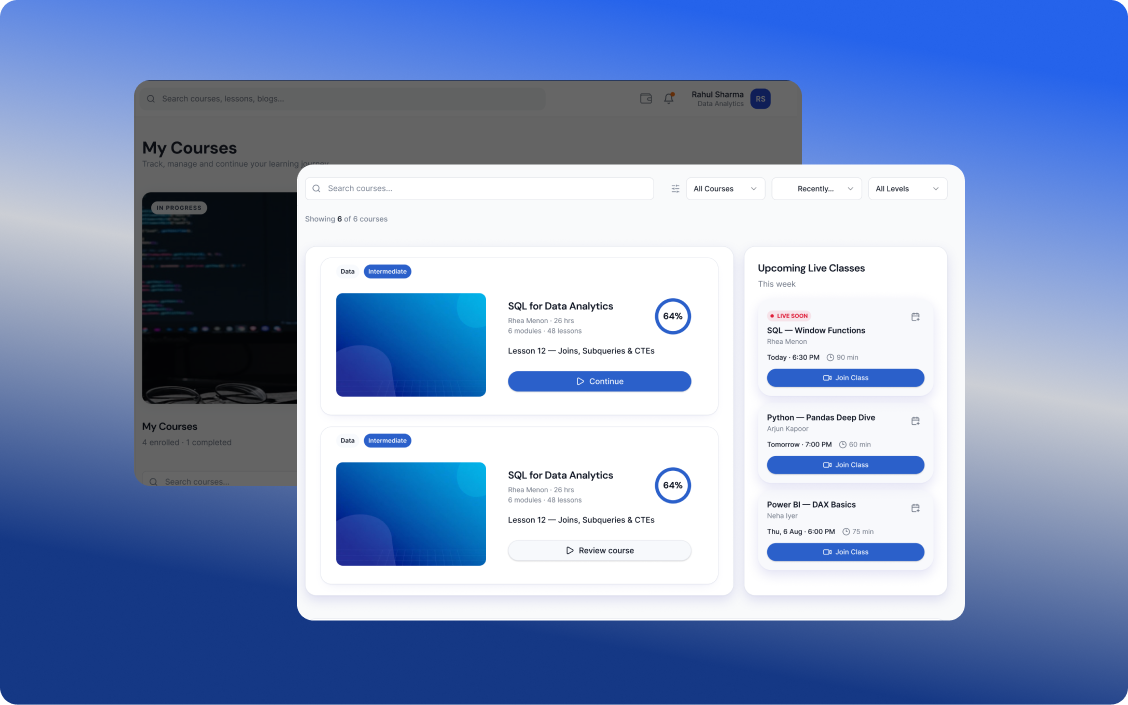
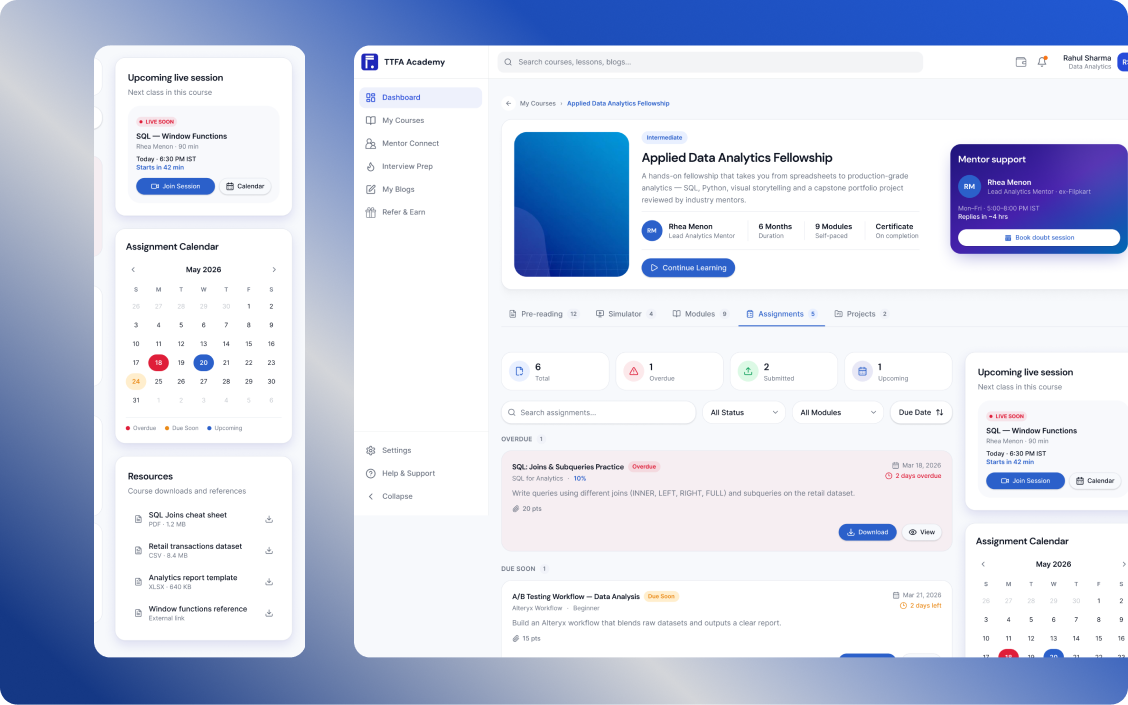
LMS EXPERIENCE
Your Complete Learning Journey, All in One Place
Learn at your pace, practice through real-world projects, build your skills, earn certifications, and discover opportunities that match your potential.
01
Learn & Build Skills
Complete industry-relevant courses designed to build practical skills and prepare you for real-world applications.
Hands-on learning
Practical Assignments & Projects
Industry Aligned Curriculum
02
Learn Through Real Projects
Put your learning into practice with assignments and hands-on projects designed to build practical skills and help you grow with confidence.
Practical assignments to strengthen your skills
Real-world projects to apply what you learn
Build experience and grow your portfolio
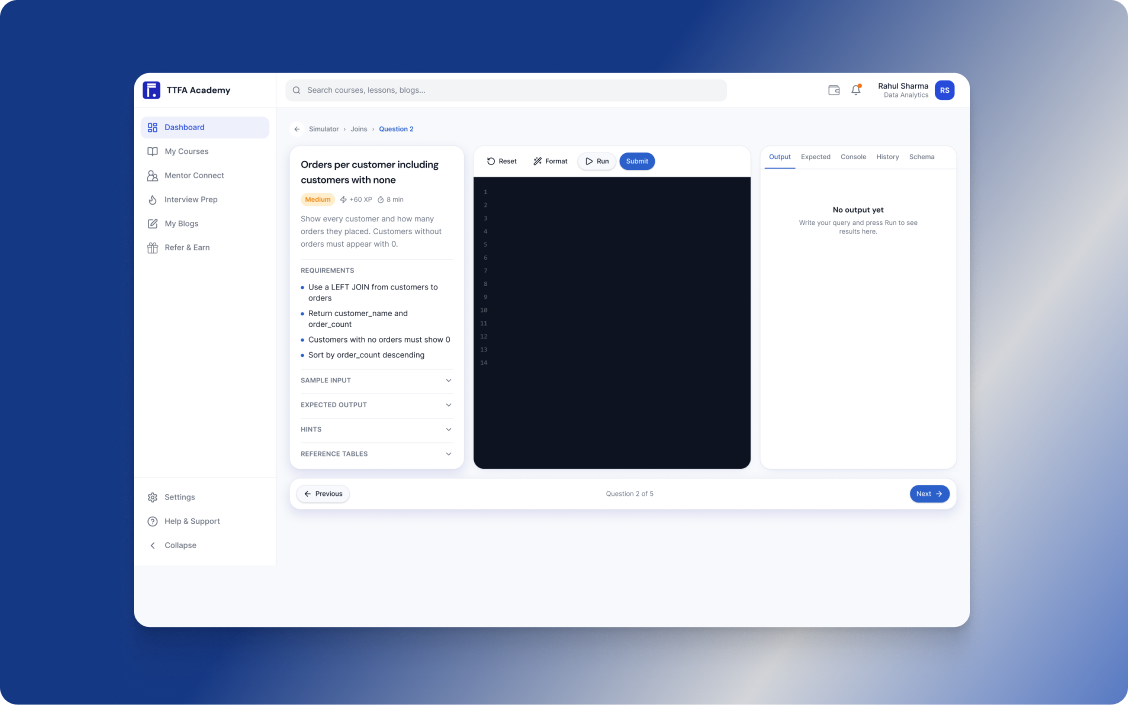
03
Learn by Doing
Practise real-world tasks with interactive simulators that help you apply your knowledge, sharpen your skills, and prepare for the workplace.
Real-world practice
Interactive simulations
Build skills with confidence
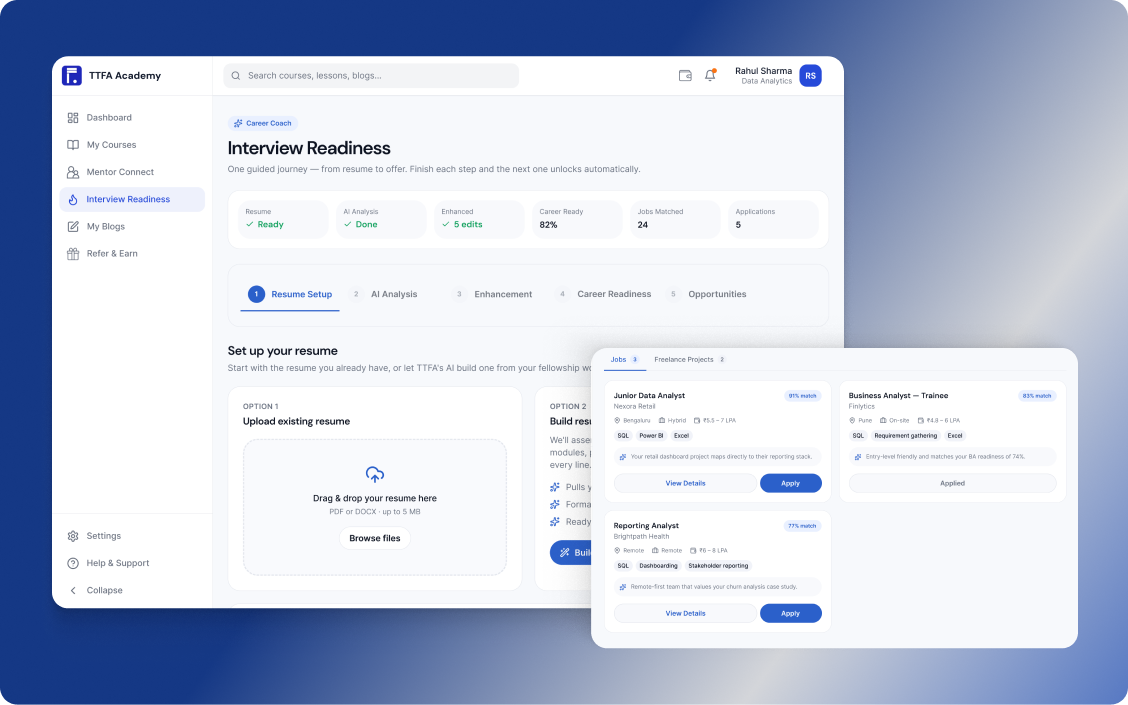
04
Discover Your Next Opportunity
Upload and enhance your resume, then discover job and freelance opportunities matched to your skills, experience, and career goals.
AI-powered resume enhancement
Personalized job & freelance recommendations
Apply to opportunities that match your profile
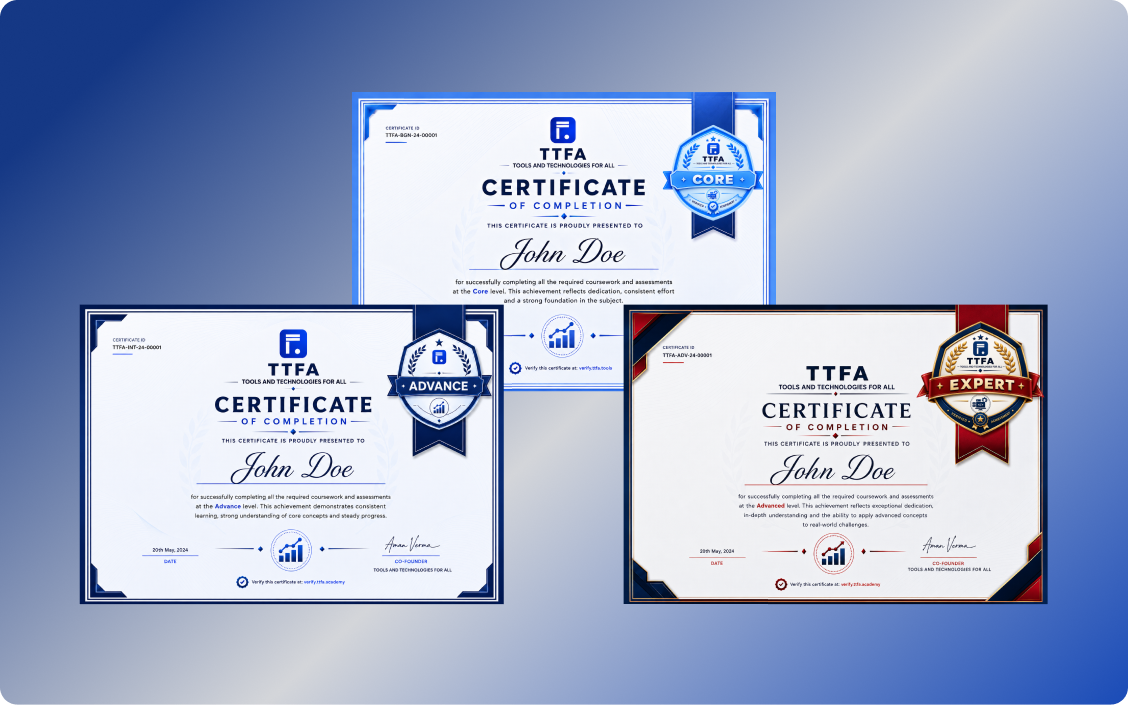
05
Earn Certifications as You Grow
Complete projects, build your skills, and unlock certifications at each level as you progress through your learning journey.
Core
Advance
Expert
Your mentors
People who do this work in production.
Names, employers and photos appear only with their written permission.
Sahil Agrahari
DevOps Engineer Fellowship
Sahil Agrahari
DevOps engineer
Sahil trains DevOps on a pipeline you build and break yourself: Linux, Git, Docker, Kubernetes and CI/CD, with the monitoring and infrastructure-as-code that keep a release standing up in production.
DevOps Engineer Fellowship
Shubham Patel
DevOps Engineer Fellowship
Shubham Patel
DevOps and full-stack engineer
Shubham trains the full stack the way a product team ships it: MERN and Next.js on the web, React Native on mobile, and the DevOps pipeline that deploys both. A feature from screen to database to production, reviewed like real work.
DevOps Engineer Fellowship
How the weeks run
Built around a full-time job.
A counsellor confirms the exact days and times for your batch on the call.
1
Weeknight live classes
Two evenings a week with the mentor, on the work of the week.
2
Weekend lab
Project time with the mentor in the room: build, get stuck, get unstuck.
3
Recordings and 1:1 slots
Every class recorded the same day; 1:1 doubt-solving whenever you're stuck.
4
Final project review
Your projects reviewed like production work, with notes you can act on.
Questions
About this program.
Anything else: ask on the call.
Yes. The program assumes you know your work, not the tool. If you've never worked in the domain, a counsellor will point you to a better start.
Every class is recorded the same day, and 1:1 slots exist for exactly this. Most people who fall behind catch up in a week.
There is career support: mock interviews, profile reviews and referrals where we have them. Nobody honest can promise you a role; your projects make the case for you.
Both. DevOps Engineer Fellowship is VILT (virtual instructor-led training): live online classes in the evenings and on weekends, in IST, recorded the same day so you can rewatch them. It runs 24–36 weeks, depending on your pace.
Designed for AI-native engineering roles: the AI in DevOps Work module covers GitHub Copilot for pipelines and infrastructure code, assistants in incidents and code review, and reading every generated line before it reaches production.
Linux, Git, Docker, Kubernetes, Jenkins, Terraform, Ansible and AWS, the way they are used at work, on projects modelled on the mentors' own. The curriculum section lists every module and topic.
Fees are not published on the site. A counsellor confirms the fee, GST and the instalment options in writing after one call; nothing is charged on the call.
Notes
Reading before you decide on DevOps Engineer Fellowship.
Researched by the mentors, with every source and the date it was last checked.