
How it works
Taught from production. Practised until it's routine.
Every program, whatever the tool, runs the same way: a practitioner teaches the work as it is actually done, you build it, you practise it, and you are never stuck alone.

Learn from production
Live classes in the evenings and on weekends, taught by someone who did this work today, in the order the work happens.
Build the real thing
Projects modelled on the mentors' production work, not textbook exercises. They become the portfolio you show.
Practise until it's routine
Graded assignments and case simulations that reproduce what the job actually asks, reviewed with notes you can act on.
Never stuck alone
1:1 doubt-solving on the LMS, recordings for the weeks life gets in the way, mentors on chat between classes.
A week in a program
Built around a full-time job.
The exact days and times differ by batch; a counsellor confirms them before you commit.
Weeknights
Live class with the mentor
The workflow, dashboard, pipeline or design of the week, built live, with the questions people actually ask.
Weekend
Lab and project time
Build with the mentor in the room. Get stuck, get unstuck, leave with something that works.
Any day
Recordings, 1:1 slots, chat
Every class recorded the same day. A 1:1 slot when you're stuck. Mentor chat for the small things.
What a project looks like
Brief, build, review. Like work.
Three per program. Each one is modelled on a mentor's real production work, never on client data.
The brief
A one-page brief the way a manager would write it: the ask, the data, the deadline, what “done” means.
The build
You build it over the module, with lab time and 1:1 slots when you're stuck. The mentor reviews the work-in-progress.
The review
A production-style review: what would break, what a senior would change, what to say about it in an interview.
What you get, and what we don't promise
A portfolio, a certificate, and a straight answer.
This is what leaving the program looks like.
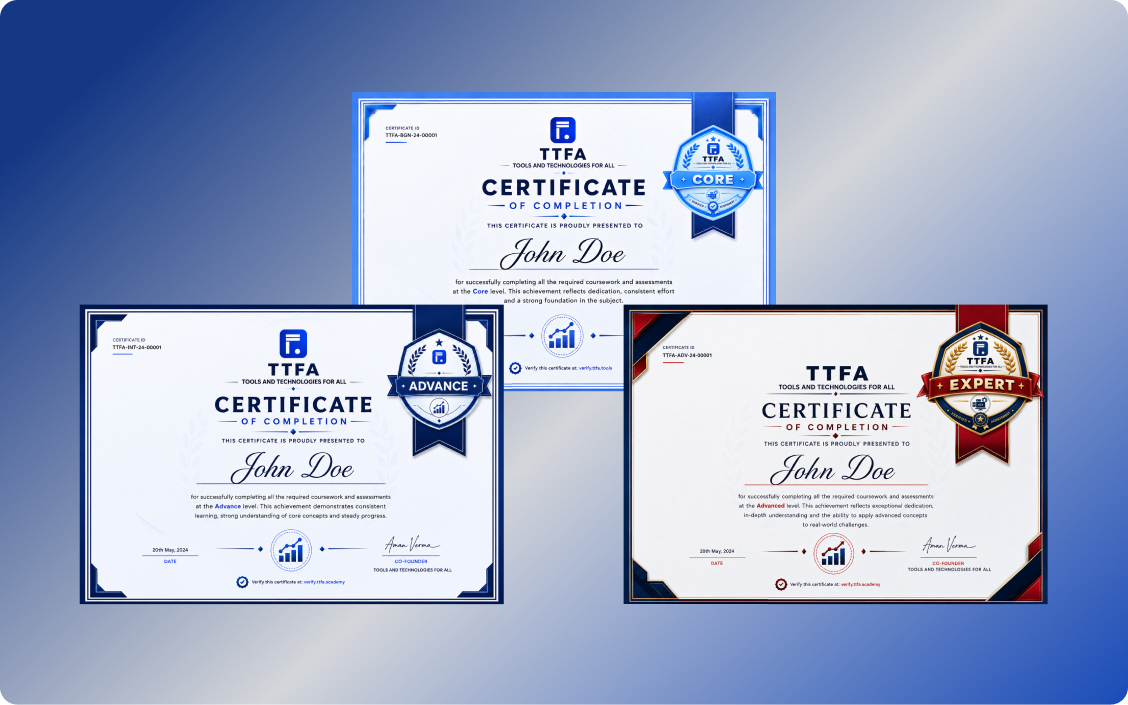
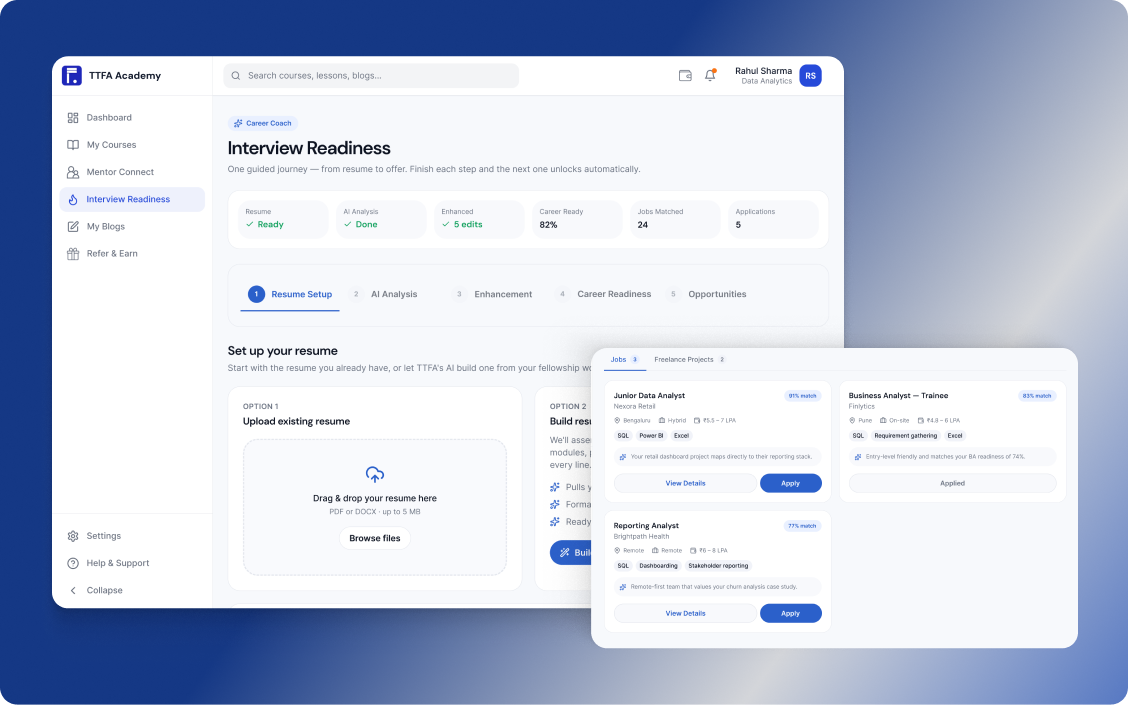
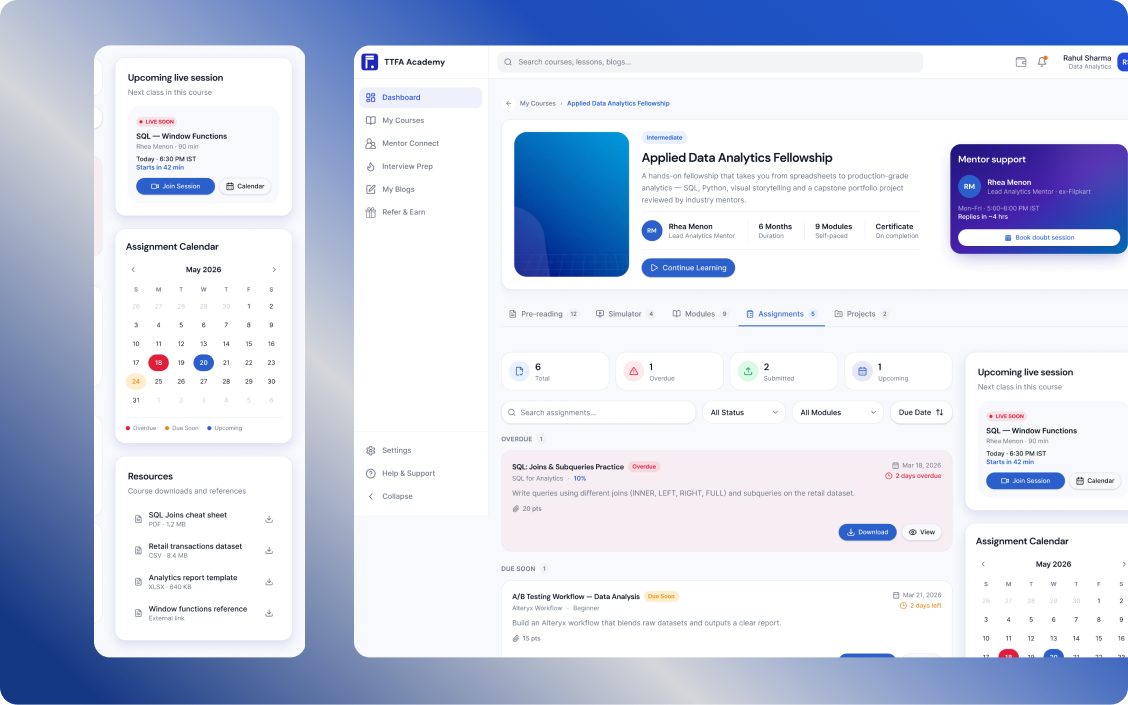
You get
- Three reviewed projects you can show and talk through
- A TTFA certificate on completing the final project
- Career support: mock interviews, profile reviews, referrals where we have them
We don't
Promise a role, a salary or a placement. Nobody honest can. Your work makes the case; we make sure the work is real.
Questions
About the method.



Have questions about our courses, learning experience, or which path is right for you? Talk to our team — no pressure, just guidance.
Plan for the live classes plus a few hours of project time. A counsellor gives you the batch's exact schedule before you commit.
No. Live classes, deadlines and 1:1 reviews are the point; recordings are a safety net, not the course.
The mentor who teaches the module, the person who does this work in production.
See it on a real program.
Pick the role you want to be seen in, and read how the weeks run.
Seamless Learning across every Device